Blog: World Mental Health Day 2026 - Lived Experiences Heard: Real Voices, Real Change
Posted by See Me, 9 October 2026
This year's World Mental Health Day 2026 is on the theme of Lived Experiences Heard: Real Voices, Real Change. This echoes the disability rights movement principle of “Nothing about us without us” meaning, having a real voice in decisions about care, work, education, and public life.
Mental health stigma and discrimination are persistent injustices that deny people opportunities, access to support, the ability to exercise their rights, and to live the life they deserve.
Centring people's lived experience, and their agency to influence change, challenges how lived experience is understood and valued. It means recognising people as experts and leaders in anti-stigma work.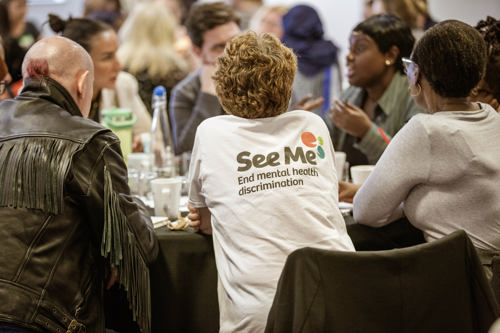
From commitment to action
At See Me, we work alongside people with diverse lived experience of mental health problems and illness to understand where stigma and discrimination exist, what impact it has and what needs to change. People have consistently told us that lived experience leadership, power sharing, and co-design are central to reducing mental health stigma and discrimination.
Strategic and policy commitment to improving equity, accessibility and inclusion are present across mental health services, education, and in workplaces settings. But commitment alone doesn't change people's experiences. The challenge is moving from strategy to action. This means asking: How is lived experience viewed as crucial expertise and evidence that changes what we do?
It also means paying serious attention to the safety of people who are sharing their lived experience. We know that experiences that feel extractive, tokenistic or lacking in trauma informed support run the risk of causing further distress for those who wish to use their experiences to make change. Whereas opportunities that promote recovery, build community and connection, embrace creativity and seek to break down power imbalances are much more likely to feel cathartic and empowering.
Agency and change
People with lived experience of mental health stigma and discrimination are often invited to share their stories. But there is a difference between sharing, being heard and having influence.
People with lived experience of mental health stigma and discrimination have self-organised for decades in psychiatric survivor and Mad Movements and beyond. They have fought for dignity, respect, and equal access to support. They have challenged assumptions, practices, and power structures to influence change in legislation, policies, and attitudes.
We know lived experience involvement and leadership is critical; it shines a light on the reality of living with mental health problems and the issues and challenges experienced by different people and communities, that are often overlooked or misunderstood. Lived experiences often point to systemic issues that impact access and benefits from services and sources of support, and the impact of how systems are designed and delivered, how resources are allocated, and how policies operate. Collective experiences reveal patterns in our systems and disparities in how different communities of people are treated. They reveal the embedded, structural issues that require change
The history of people's activism for change reminds us that lived experience participation must go beyond simply 'being heard'. Centring agency means that people with lived experience have ownership of that experience and have the choice about what they wish to share, deliver and lead, and in what context. It means redistributing resources to create conditions for people to define the problems that matter to them, to make decisions, exercise influence, and shape change.
Lived experience leadership, power sharing and co-design enable people to embed meaningful change in the systems that define the quality of their lives.
See Me has a wide range of resources to support your service, institution or workforce to centre lived experience towards meaningful change.
Anti-Stigma Arts Fund
Intersectional approaches
Young people's mental health
Upcoming Anti-Stigma Events